Website Design for UK Small Businesses
Where to actually look, what to budget, how to vet a portfolio, and when a freelancer beats a boutique studio.
Get a free homepage concept, no commitment.
Get a Free Homepage Concept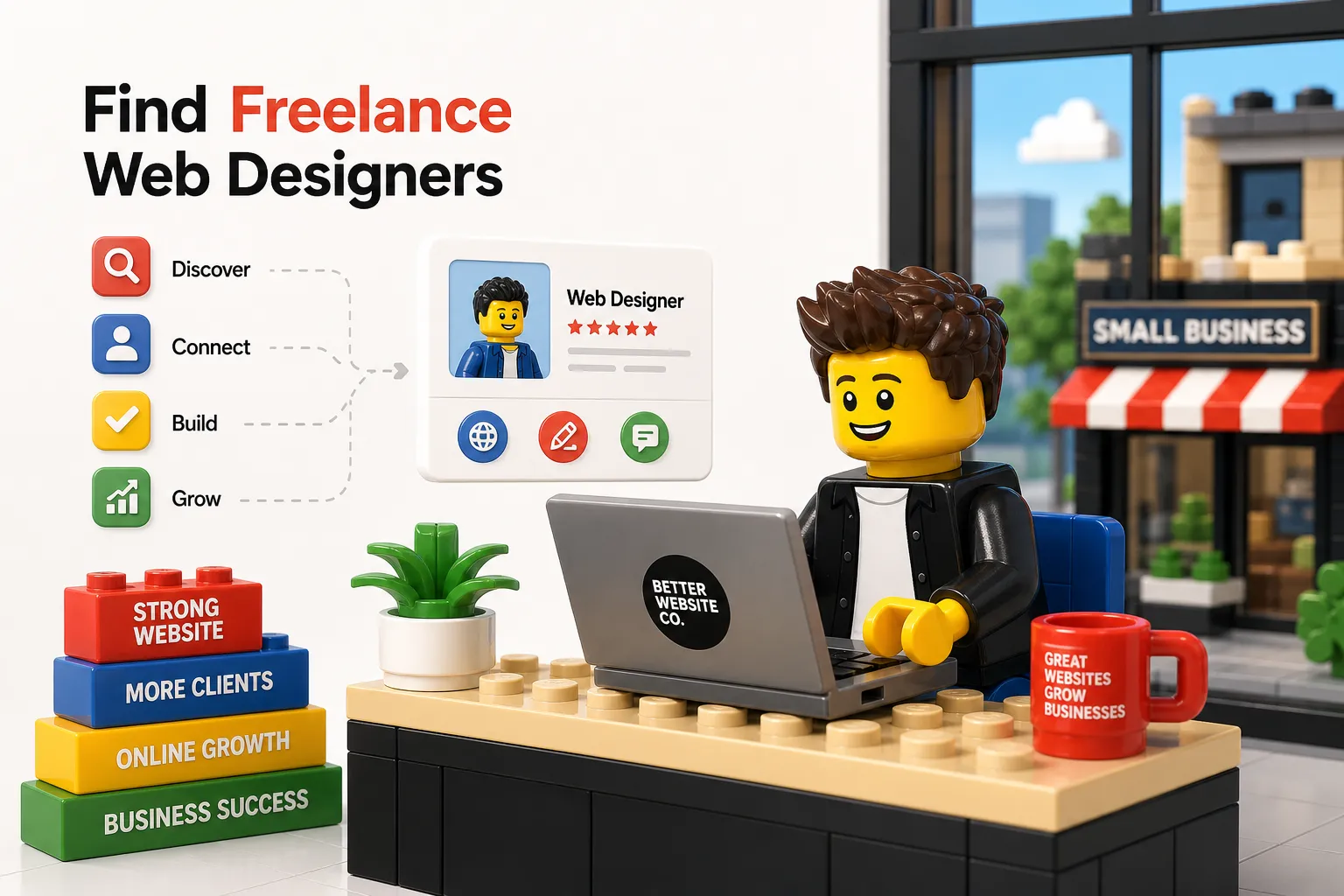
Where to find freelance website designers for UK small businesses is one of the most common questions we hear from owners who've already been burned once. You search Google, land on a platform with thousands of profiles, and suddenly you're trying to judge quality from a handful of screenshots and a five-star average that may tell you very little. The same hiring mistakes repeat constantly: choosing on price alone, skipping portfolio vetting, receiving a quote before either side understands the scope, and ending up with a site that looks fine but doesn't actually convert visitors into customers.
This gives you a practical roadmap: where to search for UK freelance website designers, what to budget realistically, how to read a portfolio critically, what questions to ask before anyone quotes you, and when a freelancer is genuinely the right call versus when a boutique studio serves your business better.
The platforms and directories worth your time
Not all hiring platforms work the same way. The right one depends on whether you want a marketplace with built-in payment protection, a portfolio directory for shortlisting, or a curated pool of pre-screened talent. Combining sourcing approaches often improves outcomes — using a discovery tool to find designers you like, then hiring through a protected platform, gives you both design fit and financial security.
PeoplePerHour is the strongest UK-specific marketplace for hiring web designers, with a large local client base, verified reviews, and platform payment protection that holds your funds until work is delivered and approved. YunoJuno is a UK-born platform that pre-screens creative and digital freelancers — a solid choice if you want a curated pool rather than filtering through thousands of unvetted profiles. Bark is a useful quick-quote tool for comparing local freelancers with verifiable reviews, particularly if you want someone nearby for face-to-face meetings.
Local platform focus matters more than people realize. Working within the same time zone means faster communication, and sharing a business context tends to strengthen contract clarity. VAT and tax discussions may also be simpler when both parties operate under UK rules, though it's worth consulting an accountant for specifics relevant to your situation.
Upwork is the largest general freelance marketplace and works well for everything from small fixes to full website builds, with structured contracts, escrow payment, and a large pool of UK-based designers alongside international talent. Fiverr is better suited to clearly scoped single tasks — a landing page, a logo refresh, a template customization — but for a full website build, quality is inconsistent enough that you'll spend significant time filtering. Toptal sits at the premium end: designers are pre-vetted, rates are higher, and it makes sense when the stakes are significant and you don't want to spend time screening candidates.
Behance and Dribbble aren't hiring platforms — they're visual discovery tools, and that distinction matters. Use them to identify designers whose aesthetic matches your brand, then take a three-step approach: shortlist on Behance or Dribbble based on design quality, verify identity and work history on LinkedIn, then hire through a protected platform like PeoplePerHour or Upwork.
What freelance web design actually costs in the UK
UK pricing for freelance website designers varies considerably. Junior designers typically charge £25–£50 per hour, with project quotes running £500–£2,000. Mid-level experienced designers charge £40–£80 per hour and £1,200–£3,500 per project. Senior specialists reach £70–£120+ per hour, with complex builds running £5,000–£25,000 or beyond. The critical point: the cheapest hourly rate is rarely the cheapest delivered cost — once revisions, rework, and the time you spend managing the project are factored in, a more experienced designer at a higher rate often lands cheaper overall.
A brochure or informational site of around five pages typically runs £1,500–£3,500 with an experienced freelancer. A freelance WordPress developer building a CMS site will generally quote £2,000–£6,000, depending on complexity. An ecommerce build on Shopify or WooCommerce is generally £4,000–£8,000 for a standard setup, rising significantly for custom features or larger product catalogs. Scope clarity at the brief stage is the single most important factor in whether a project comes in on budget or runs over it. If you want a realistic number for your specific situation rather than a general range, [our free Website Cost Calculator](/calculator) gives you a starting estimate in about two minutes.
How to vet a portfolio before you hire anyone
A visually strong portfolio is not the same as evidence of a reliable designer. Look for live URLs you can test yourself rather than screenshots alone — a functioning site tells you the designer can actually deliver, not just present. Strong portfolios also include case studies that explain the client's problem, the designer's specific role, decisions made, and measurable outcomes such as improved conversion rates or faster load times. Check that designs are mobile-responsive and that design choices reflect business goals rather than aesthetic preference alone.
The most common warning signs: portfolios made entirely of screenshots or concept mockups with no live sites, vague project descriptions that suggest the designer executed without thinking strategically, desktop-only presentations with no mobile views, and template-heavy layouts presented as custom work. No testimonials and no measurable outcomes are also worth noting. If you can't tell what the designer actually solved, how they worked, or whether the finished site performs, treat that as a warning sign regardless of how attractive the visuals are.
What to ask before anyone sends you a quote
Six questions are the most diagnostic for hiring a UK freelance designer, each surfacing a different category of risk: “Walk me through your process from brief to handoff” reveals whether they have a structured approach. “What do you need from me before you can quote accurately?” — a good designer asks about goals, content readiness, and integrations before estimating; if they quote without asking, that's a scope problem waiting to happen. “How many revision rounds are included, and how do you handle change requests?” since revisions are the biggest driver of cost overruns on fixed-price projects. “What's excluded from your quote?” — common exclusions include copywriting, stock photography, SEO setup, hosting, and post-launch support. “Do you handle responsive design and CMS setup, or design only?” since some designers deliver visual files and hand off to a developer while others build the finished site. And “What does post-launch support look like?” — most freelancers hand over a finished site and step away, which matters for your long-term planning.
A clear brief gets you accurate quotes rather than inflated estimates built around uncertainty. Before reaching out, pull together: your business description and the site's primary goal, the desired visitor action, number of pages and templates needed, content readiness (copy, images, branding assets), platform preference if you have one, two to five inspiration sites with notes on what you like, required integrations, and your desired timeline and budget range.
Freelancer vs. boutique studio: what’s actually right for your business
A freelancer makes strong sense when your project is clearly scoped — a defined number of pages, established branding, content ready to go, someone internally to manage the project, and budget as the primary constraint. The trade-off is single-person dependency: if your designer becomes unavailable or steps away post-launch, you're left managing updates and fixes on your own, often without the technical knowledge to do it well.
A boutique studio takes on strategy, design, and ongoing support as a package rather than handing over a finished file and stepping back. [Better Website Co.](/pricing) is one example of this model in practice — conversion-focused design that applies visitor psychology and trust signals to every decision, from the headline and layout to the booking flow and microcopy, with Care Plans covering ongoing maintenance, SEO content, and conversion optimization at an accessible monthly fee. For small businesses that need their website to generate inbound inquiries consistently, not just launch and sit static, that ongoing layer matters considerably.
The right answer comes down to one question: is your website a one-time project, or an active business tool that needs to keep improving? If it's the latter, a freelancer who delivers once and moves on is a mismatch for what you actually need. If you have a well-defined, scoped build with content ready to go, a strong freelancer can do the job well and cost-effectively.
Frequently asked questions
Where can I find a freelance web designer near me in the UK? Bark.com lets you filter by location and request quotes from designers in your area. PeoplePerHour also allows location filtering, and LinkedIn is useful for finding and verifying local talent before you hire through a protected platform.
How do I hire freelance website designers for UK small businesses on a tight budget? Start with a clear, scoped brief — vague briefs inflate quotes. Junior designers on PeoplePerHour or Upwork can deliver solid work on smaller budgets if the scope is well-defined. Avoid choosing solely on the lowest price; factor in revision allowances and what's excluded from the quote.
Is it better to hire a freelancer or a studio for a small business website? If your project is clearly scoped and you have someone to manage it internally, a freelancer is often the more cost-effective choice. If you need ongoing support, strategy, and conversion optimization after launch, a boutique studio typically offers more value over time.
Use UK-focused platforms like PeoplePerHour or YunoJuno for payment-protected hiring, Behance and Dribbble to evaluate design quality before reaching out, and the diagnostic questions above before requesting any quotes. If you realize what you actually need is an ongoing partner rather than a one-off build, [get in touch](/#inquiry) and we'll help you work out which makes more sense for your situation.